Slow Drops and Levitating Water

Slow food, slow water, slow drops, sexy no…..?
More water, Levitating water
Slow food, slow water, slow drops, sexy no…..?
More water, Levitating water
Pure chocolate is the best. Nevertheless some recipes with chocolate can be irresistible. It is easy to make these chocolate covered strawberries, everything you need to know is right here: Materials, Techniques and Presentation on these instructive slides.

Chocolate macarons, you can find the recipe here at Ms Adventures in Italy
Making macarons was easier and more fun than I hoped it would be, but it was perhaps the biggest mess I’ve made in the kitchen for quite some time

Chocolate cake in a mug made with the microwave. Very easy and with an instructive video on flickr.
a dead-easy chocolate cake recipe that only requires hot chocolate mix, flour, an egg, cooking spray, and oil (all stuff you’ve got in your pantry anyway). Grab the biggest microwavable coffee mug you’ve got in your cupboard, and cover the inside with cooking spray. Mix up four tablespoons of flour and nine tablespoons of hot chocolate mix, then throw in three tablespoons of water, three tablespoons of oil and one egg. Once it’s thoroughly mixed into an even batter, microwave the whole shebang for three minutes on high.
Thanks Lifehacker.com

Human activity is hard to predict. In researching human behavior this uncertainty or lack of information is usually described by scientists as stochastic models. A stochastic model means that even if the initial condition (or starting point) is known, there are many possibilities the process might go to, but some paths are more probable and others less. One of the simplest stochastic models for human activity is a point process in which independent events occur at a constant rate.
Such processes are referred to as homogeneous Poisson processes, and they are used to describe a large class of phenomena, including some aspects of human activity. A Poisson distribution expresses the probability of a number of events occurring in a fixed period of time if these events occur with a known average rate and independently of the time since the last event.
The current availability of a lot of digital data has made live easier for scientists to study human behavior. For instance e-mail communication records are attracting much attention as a proxy for quantifying deliberate human behavior because of the omnipresence of e-mail communication and availability of e-mail records.
Luís Amaral, associate professor of chemical and biological engineering in the McCormick School of Engineering and Applied Science at Northwestern University, and his collaborators set out to answer the following question:
But how do people respond to those e-mails? Do they act rationally, responding to the most important first, making sure the process is efficient? Or do they send e-mails randomly, when they are at their computers or when they have time, without any regard to efficiency?
In other words do they send e-mail according to a Poisson model, a random model, unpredictable to a certain degree? Or do they send e-mails in a more rational more predictable way.
Previous research suggested that this rational model applied to sending e-mails. People respond to e-mails in the most efficient way. They adapt to a certain rational reasoning, e.g. A Guide to E-Mail Triage.
But not Luis Amaral,
“I was not convinced, since I don’t do it in a rational way,” he said. But if a random model was correct, there would be a typical interval between e-mails — which, when Amaral looked at the data, wasn’t the case. He wondered if it was possible for people to send e-mail randomly but still have non-random intervals where they didn’t send e-mail.
The answer, it turned out, was fairly simple: People don’t send e-mails when they are sleeping.
Human behavior is primarily driven by external factors such as circadian and weekly cycles, which introduces a set of distinct characteristic time scales, thereby giving rise to heavy tails. This research found that sending e-mail was a model in which people send e-mails at random, but the probability of them sending e-mails during a given period depended on what that period was. If it was in the middle of the night, the probability was near zero. If it was during the weekend, the probability was much lower than during weekdays.
Now why is this important?
“If you know how people access that service, you can better plan how much capacity you need, when you need it, and how to best engineer your system to supply that capacity,” Amaral said. “It also teaches you how to interact with the system — a good time to send an e-mail is just about the time that the person has arrived at work.”
Thanks NorthWestern University NewsCenter.
Related post on this blog: Online Non verbal communication

R. D. Malmgren, D. B. Stouffer, A. E. Motter, L. A. N. Amaral (2008). A Poissonian explanation for heavy tails in e-mail communication Proceedings of the National Academy of Sciences, 105 (47), 18153-18158 DOI: 10.1073/pnas.0800332105

Somewhere along the way we have lost our friendship and our love, and our lust for one another. My depression has really been hard on him. He seems to think I don’t know that. He avoids me by drinking and working. Myself, I feel like I am giving up on the relationship. Using the little energy I have to create and stimulate the growth of new friendships.
If you want to know about the effects of depression on marriage please read this post on Vicarious Therapy: Love, Work, and Play
Marital Interactions of Depressed Patients
Conclusion
Marital distress is not specific for depression, the influence of gender on the marital distress is unknown. What is already known is that depressed women are significantly more likely to generate stressful interpersonal events, which both perpetuate depressed mood and set the stage for depressive relapse. Depression has interpersonal causes, is interpersonally mediated, and that interpersonal factors are linked to depression relapse. This should be taken into account when treating patients of both gender with depression.
What to do about it
The ones closest to the Depressed are often on “the front lines” of the depression battlefield, and they are sometimes unarmed with the necessary tools to cope. Compassion fatigue, a term used to describe those caregivers who have been unknowingly drained by another’s illness or care-needs, is often the result. It can test even the most secure of relationships.
Some Tips on Melancholy Waves
U REHMAN, J GOLLAN, A MORTIMER (2008). The marital context of depression: Research, limitations, and new directions☆ Clinical Psychology Review, 28 (2), 179-198 DOI: 10.1016/j.cpr.2007.04.007

This is Mrs United States, she is a MD as well as a psychiatrist. More photo’s here. Interview with Dr Garian Hunter here.
Why?
When I decided to compete for Mrs. South Carolina and then Mrs.United States, choosing my platform of anti-stigma and mental health awareness was simple as I was already living this platform every day of my life as a psychiatry resident and advocate for those suffering from mental illness. Almost every day I would hear stories from my patients about how real stigma is in their lives and how devastating an enemy it can be. I consider it an honor to be a voice for those who often times cannot fight for themselves and feel so blessed to have this opportunity to make a difference in their lives.
I couldn’t resist posting this, want to know what to think about this read the original post on Shrink Rap.
I think it is great publicity and hope she will do some good for patients and public opinion on psychiatry with it.
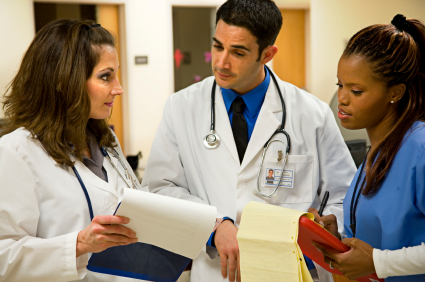
You should warn starting medical school students of the social consequences of studying medicine. In a recent study comparing medical students with students on a different degree course (in economics) at the same university it has been shown that medical students are socially exclusive and feel separated from university life. Moreover, the reasons for this separation are out of the students control.
What are the reasons for this social segregation?
How did they study this?
Data were gathered using an anonymous, self-rated questionnaire devised by the researchers. The study population consisted of medical and economics students in Years 1-3 studying at a large, campus-based university in the UK (University of Birmingham). A sample of 50 medical students from each year group of 400 students was invited to participate. Questionnaires were also distributed at one lecture for each year group of economics students.
Medical students were found to draw more of their close friends and housemates from among their coursemates, and were more likely to have a romantic relationship with a coursemate and to participate in sports clubs and societies with membership exclusive to coursemates.
Drawbacks of this situation
What can be done?
Students should be encouraged to make social contacts with people outside their group by participating in networks other than medical. They should be informed about these consequences of joining med school.
Hannah Blakey, Eve Blanshard, Helen Cole, Fiona Leslie, Rosamund Sen (2008). Are medical students socially exclusive? A comparison with economics students Medical Education, 42 (11), 1088-1091 DOI: 10.1111/j.1365-2923.2008.03126.x

Medicine 2.0 is a bi-weekly blog carnival which collects some of the most interesting posts about Web 2.0 and Medicine.
The posts are presented in a Google Presentation of Medicine 2.0 carnival.

Google is significantly more efficient in searching for specific medical information than other search engines such as Yahoo!, Ask.com and Wikipedia. Moreover, general search engines guide users to websites likely to contain information on a topic of interest with greater efficiency than directly accessing an individual website (eg, Wikipedia, MDconsult and others).
Physicians are concerned about the accuracy of the information identified with ordinary search engines. They often believe that medical search engines identify websites of higher quality than generalized search engines.
When seeking medical information they mostly prefer websites such as:
These medical websites also have disadvantages:
How was this research done?
This institutional review board–approved case cross-over study randomly assigned 89 medical student volunteers to use either Google or any other web-based resource (excluding Google) to research 10 advanced medical questions in a multiple choice exam. Primary outcome measures were resource efficiency (inversely related to number of links used to identify the correct answer for each question) and correctness (number of correct answers/total number of questions answered). For Google searches, the sites providing the information in question were also evaluated.
Searches initiated with non-Google resources on average required 0.44 more links per search than Google to correctly answer the question. The Google and non-Google searches didn’t differ in correctness of the answers.
It is important to notice that Google often guided users to a list of established medical resources.
These included journal articles, eMedicine, Medscape, Medline Plus, PubMed, disease-specific sites, and a
range of medical dictionaries. These sites are of high quality. The two end sites that most commonly provided the user with a correct answer after a Google search were the interactive encyclopedia Wikipedia and eMedicine. To reach the correct information on these sites fewer steps were required compared to PubMed or journal sites.
Limitations of this study
Information requested was specific medical information not searching for clinical decision making, systemic reviews, or evidenced-based practice. Participants were young, educated, high Internet users with much experience using search engines.
Google best guided users to web-based medical resources or medical publications that presented accurate information for the topics in question.
P JOHNSON, J CHEN, J ENG, M MAKARY, E FISHMAN (2008). A Comparison of World Wide Web Resources for Identifying Medical Information Academic Radiology, 15 (9), 1165-1172 DOI: 10.1016/j.acra.2008.02.010

Einstein’s Messy Desk, can you think of others with such a messy desk, I bet you can, I can anyway.
Related posts:
Medblog workstation
Ideal workspace
Another Ideal Workplace
