This delectable Swiss Chocolate Knife is made of the finest Swiss chocolate, and is filled with hazelnut praline. Featuring the Victorinox Swiss Army logo, this fine confection is modeled after the Swiss Army Spartan multitool. The Victorinox Swiss Army Spartan, Chocolate Edition is a Swiss Knife Shop exclusive.
But now for some new discoveries of free pictures. PicApp is a photo resource site which has thousands of very high quality images which are available for bloggers to add to their blog posts for free. You can search for images. They are nicely displayed. When selecting an image your offered 4 choices. Embed your picture in your blog post, add it to a lightbox, send it to a friend by e-mail or share it with others on a social media site. The picture above this post is embedded with PicApp, you can select different sizes and lay out options before copying and pasting the image in your post. You can probably remove the link but for the sake of argument I have untouched the picture from PicApp.
This picture is from Public Domain Pictures for free! This site can be viewed in different languages. It also has sponsored pictures for 0.83 euro. Prefer these kind of images without Java and/or links. What do you think?
Search millions of photographs from the LIFE photo archive, stretching from the 1750s to today. Most were never published and are now available for the first time through the joint work of LIFE and Google.
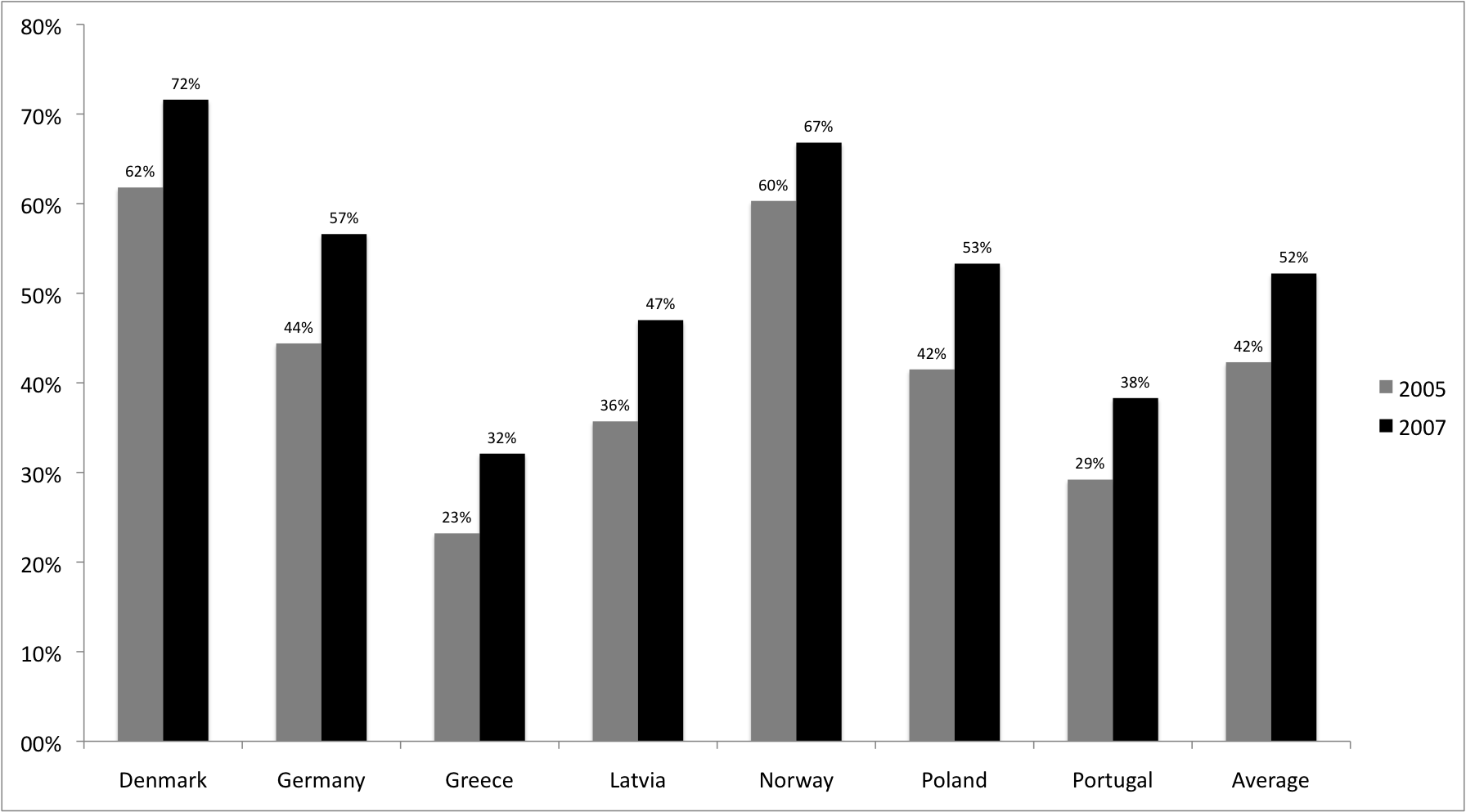
More than 52.2% of the European population use the Internet for health related purposes. In 2005 this percentage was 43.2%
Significant growth in the use of Internet for health purposes was found in all the seven countries participating in the survey, with an average growth of 9.9% (8.5 – 11.3). Highest growth was noted in Germany (12.2%), Poland (11.8%), and Latvia (11.3%), whereas the lowest growth was noted in Portugal (9.1%), Greece (8.9%), and Norway (6.6%).
In the younger age group aged 15 – 25 years, 83.5% of the women used the Internet for health purposes in 2007. The corresponding proportion for men was 72.4%. At the older age group (66 – 80 years), we saw the opposite effect, where 22.6% of men and 9.9% of women used the Internet for health purposes.
Overall with increasing age the use of Internet for Health information decreases
There is considerable variation in the importance placed on the Internet as a source of health information within the seven European countries studied. In Denmark currently, the Internet is already considered the second most important source, preceded only by “health professionals”. At the other end of the scale, in Greece, the Internet is considered the least important source of information about health and health-related problems.
There is an increase in Internet use for health information. To a great extent this increase in use can be explained by improved Internet access.
Rather than using the Internet to search for and read health information, people are increasingly taking part in online communication with peers, unknown professionals, and their family doctors. In addition, the Internet is being used by more people for ordering medical health products.
How was this study done?
The survey data were collected through computer-assisted telephone interviews. A representative sample (N = 14,956) from seven European countries has been used: Denmark, Germany, Greece, Latvia, Norway, Poland, and Portugal. The European eHealth Consumer Trends Survey was first conducted in October-November 2005 and repeated in April-May 2007. In addition to providing background information, respondents were asked to rate the importance of various sources of health information. They were also queried as to the frequency of different online activities related to health and illness and the effects of such use on their disposition.
Limitations
Short follow-up period of 18 months.
No information on education of the respondents.
No information on income from the respondents.
The use of Internet for health information is growing. In the future elderly will also participate. Interactivity will play an important role in ehealth information development.
What do you think?
Per Egil Kummervold, Catherine E Chronaki, Berthold Lausen, Hans-Ulrich Prokosch, Janne Rasmussen, Silvina Santana, Andrzej Staniszewski, Silje Camilla Wangberg (2008). eHealth Trends in Europe 2005-2007: A Population-Based Survey Journal of Medical Internet Research, 10 (4) DOI: 10.2196/jmir.1023
Both Shrink Rap and Mind Hacks report on a debate about how transparent the process for developing the upcoming DSM-V should be. This debate is published in the LA Times. Those in charge of the revision want secrecy, nobody knows why. It is suggested in the comments it could have something to do with the insurance companies?
Besides transparency of the making of the new revision of this psychiatric diagnostic bible other problems were mentioned on this blog as well as others:
Will Internet addiction be a new diagnosis in the DSM V? Medicalize problems again. In an editorial in the American Journal of Psychiatry Internet Addiction is proposed as a new diagnosis in DSM V. Now the American Journal of Psychiatry used to be a serious peer reviewed journal although some of us doubt this feature for a while now.
More than half the 28 new members of writers of the next edition of the American Psychiatric Association’s (APA) Diagnostic and Statistical Manual of Mental Disorders (DSM) have ties to the drug industry.
Suicidal behavior as Sixth Axis in DSM VIt is suggested in an editorial of the American Journal of Psychiatry that suicidal behavior be considered a separate diagnostic category documented on a sixth axis. Ridiculous. Suicidal behavior (death and attempts) is a symptom of various psychiatric conditions. We will need a seventh axis for addiction, another item often overlooked. It is a kind of safe guard against lack of interest, lack of empathy for psychiatric patients.
There is still a long way to go. The DSM-V is due out in May 2012, and all mental illness and proposals for the classifications of new mental illness are currently under review by the DSM-V committee.
At Dr Deb the new grand round is up. She made them into playlists, their is even a patient playlist, mental health playlist and many more, so go and enjoy.
Gaming among college-aged men may provide a healthy source of socialization, relaxation, and coping.
In college-aged males:
there were no significant correlations between participants’ BMI and frequency of electronic game play
there were no significant correlations between academic performance and frequency of electronic game play
there were no significant mean differences between other variables related to social functioning (e.g., relationship status) and frequency of electronic game play, revealing no obvious trends in interpersonal functioning for those who play games more or less frequently.
other media usage was either not related to frequency of electronic game play as for magazines or was inversely related, as with the frequency of consumption of television.
This last observation suggests that individuals may be more selective with their choice of media rather than, as has been the general assumption, generally consuming multiple forms of media at equivalent rates.
In spite of their negative associations electronic game play actually facilitate positive relationships and coping skills to some extent.
These results are only applicable to college-aged males. Gegeneralizations should be limited to this group. Itis possible that they are better able to manage the frequently conflicting academic, social,
and intrapersonal demands of their developmental period.
The frequency of playing was positively correlated with being bored as well as playing when lonely and when stressed.
How was this study done?
The current study investigated relationships between frequency of electronic game play and obesity, the social/emotional context of electronic game play, and academic performance among 219 college-aged males. They electronically signed an informed consent form, completed the online survey, received a debriefing form that they could print for their records, and were offered the opportunity to request results of the study after its completion.
Results revealed that 92.7% of participants reported that they had played electronic games within the last month. Additionally, 62.1% of participants reported that they played
electronic games within the last 24 hours. Individuals who were identified as current game players (played electronic games within the last week) reported a weekly average of 9.73 hours of game play. Of those currently engaging in game play, 8.5% reported playing an average of 35 hours per week.
The reported mean age of commencement of electronic game play was 7.5 years of age.
This study has to be replicated in other samples, with experimental and longitudinal studies will be necessary to ascertain the impact of prolonged gaming on social functioning. This also has to be done in other age groups in order to elucidate the role that electronic gaming plays across the lifespan.
Elizabeth Wack, Stacey Tantleff-Dunn (2008). Relationships between Electronic Game Play, Obesity, and Psychosocial Functioning in Young Men CyberPsychology & Behavior, 2147483647-4 DOI: 10.1089/cpb.2008.0151
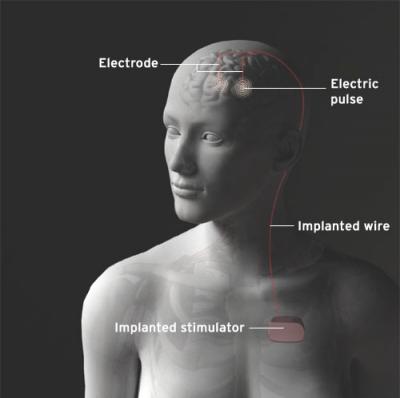
In 17 patients participating in this 10-month, crossover, double-blind, multicenter study assessing the efficacy and safety of stimulation of the subthalamic nucleus one patient had a parenchymal brain hemorrhage (bleeding) resulting in a permanent finger palsy. Two patients had an infection leading to removal of the pulse generator. Seven transient motor and psychiatric symptoms induced by active stimulation occurred in the first month of stimulation and resolved spontaneously or rapidly after adjustment of the setting. Ten other patients also had serious but transient side-effects.Three patients became hypomanic, three suffered from anxiety, two of depressive symptomps the others suffered from transient neurological side-effects such as dyskinesia, trouble walking, dysarthria, dysphagia and facial asymmetry.
Deep Brain Stimulation of the subthalamic nucleus significantly reduced the symptoms of severe forms of OCD.
In conclusion, findings from this 3-month crossover study suggest that stimulation of the subthalamic nucleus may lessen the severity of obsessive–compulsive symptoms and improve global functioning in patients with refractory, severe OCD. Serious adverse events occurred in 11 of the 17 patients in whom stimulators were implanted. The occurrence of severe adverse events, the small number of patients, and the short duration of the study highlight the risks of stimulation of the subthalamic nucleus and the need for larger studies with longer follow-up. In addition to assessment in a larger number of patients, a comparison with other stimulation targets and surgical procedures would be desirable, as would an evaluation of the long-term benefits of stimulation of the subthalamic nucleus in patients with OCD, notably with respect to their quality of life and their ability to function in social and work environments.
Found another ideal workplace, nobody could direct me to my former ideal workplace. This one is a little expensive but looks very comfortable, maybe a donation? The price list and specifications were not yet available for download but will keep you informed. The workplace is called the emperor not very nerdy nor geeky.
Scientists have created the first ‘humanoid’ robot that can mimic the facial expressions and lip movements of a human being.
‘Jules’ – a disembodied androgynous robotic head – can automatically copy the movements, which are picked up by a video camera and mapped on to the tiny electronic motors in his skin.
It can grin and grimace, furrow its brow and ‘speak’ as his software translates real expressions observed through video camera ‘eyes’.
The project, called ‘Human-Robot Interaction’, was devised at the Bristol Robotics Laboratory (BRL), run by the University of the West of England and the University of Bristol. Want to know more about the technique and developments read The robot that can pull faces on Mailonline