Everyone has experienced the recollection of memories by some smell or odor. Sometimes these memories have to be fetched from a long long time ago not without difficulty. Often smelling something nice makes me wonder of what it reminds me off. But is this also evidence based or just sentimental crap?
According to a recent review not all of this is just nonsense. This review especially interested me due to it’s creative use of research design and theories about memory. Autobiographical memory across the life span can be divided into intervals across the life span. Over all the age distribution of memories evoked by verbal information is divided in the following phases: childhood amnesia, the bump, and recency or forgetting. Childhood amnesia is why we can’t remember almost anything before the age of 10, the bump is the enormous amount of memories that can be recalled from the ages 10 to 30 years, and recency reflects better retention of events occurring from the last 10 years.
This knowledge is based on verbal cues on personal memories, when comparing verbal cues to odors it’s found that older individuals have a bump with olfactory induced autobiographical memories whereas younger cohorts don’t have this bump. Moreover,presenting odors or words and asked the older participants to relate any autobiographical event to the respective cue the memories of the elderly evoked by odors were clearly located to the first decade of life whereas the younger group peaked on verbally evoked memories in early adulthood. The bump for memories evoked by odor appear earlier even before the age of 10, memories triggered by olfactory information are localized to the first decade of life (< 10 years) rather than to young adulthood. This is in contrast with other triggers such as verbal cues.
odor-evoked memorie are more emotional, associated with stronger feelings of being brought back in time, and have been thought of less often as compared to memories evoked by other cues
So it seems these sentimental observations seem to be true especially with increasing age, what do you think?
Larsson, M., & Willander, J. (2009). Autobiographical Odor Memory Annals of the New York Academy of Sciences, 1170 (1), 318-323 DOI: 10.1111/j.1749-6632.2009.03934.x
Unfortunately not. After reviewing the literature the author of the review: Is Memory for Music Special, hesitantly had to admit that memory for music is not special. Popular music is not better remembered than other kinds of stimuli learned in young adult hood. Setting text or lists to music is not a better way to remember them. Music is not a better Mnemonic device. Music is not processed differently from other kinds of stimuli and as such is not better remembered than language processing or visual cues. Memory theories can be applied to both musical stimuli and nonmusical stimuli.
However,music does facilitate semantic memory in patients with dementia and in healthy older adults and this effect, although small in magnitude, is not limited to familiar melodies.
The author nevertheless keeps to his idea of memory for music being different since music differs from other stimuli. Music lying between stimuli with fixed concrete meaning and nonsense stimuli. Music is not meaningless, it communicates emotions and ideas although in an abstract, symbolic way. Music also has a structure but this structure is very different from other stimuli such as the structure of a poem. He’s probably right, who doesn’t have experiences as finding the right place, name or location when listening to music connected to that symbol. Who did not have the experience of listening to music and recollecting emotions or visual stimuli from past occasions when listening to the same music?
I think he is right after all, time will tell, what do you think?
Schulkind, M. (2009). Is Memory for Music Special? Annals of the New York Academy of Sciences, 1169 (1), 216-224 DOI: 10.1111/j.1749-6632.2009.04546.x
Time management is often necessary to complete tasks in a give period or sequence. For this you have to weigh the importance of your tasks, which is the most important or urgent. You’ll mostly use some way to organize and remind your tasks (to-do lists), in order to reduce the cognitive load by having to think about your tasks all the time. Another important topic is dividing your time and estimating the time needed to complete tasks. I mostly use “Getting Things Done” or GTD for time management, follow the link for a post on this blog about GTD.
Memory obviously plays an important part in time management. You need your prospective memory to remember something later to be done, task to be done in the future at the right time and place. This is were your prospective memory comes in. You need your retrospective memory to remember what you have done and what has to be done next and when.
In a recent publication results were published from questionnaires on time management and both types of memory by 425 undergraduates between the age 19-59 years.
Those who had better prospective and retrospective memory also were more likely to set goals and priorities and they also preferred an organized approach to projects, it also seems like they constantly take Nootropics powder supplements in order to improve their memory. They also reported to be more in control of their time compared to those scoring less on both memory scales. Interestingly the use of making to do lists, scheduling activities and avoiding interruptions did not correlate with memory.
Thus, it is not clear whether individuals who think they have good memories do so because they use these time management strategies or those with good memories don’t use these time management strategies because they don’t think they need them. Further research needs to investigate the role of time management mechanics on these memory processes.
Bad news for those developing software and other things to help with time management. This is not bad news for those who have less information active in memory because those with weaker memory may have less distraction and stress and they may reach goals more efficiently than those who have more information active in their mind, very important to point out that gaming effects on productivity, some think that it helps them but that’s not likely the case.
But never forget, these are correlations and correlations are not causations.
Why is this important?
This kind of research can help to find out who could benefit from time management training. Clearly time management and it’s solutions is not one size fits all. Individual differences are important to be considered in how to use time management, if necessary at all. And which solution does work for this individual. Do you need time management and how do you incorporate it in your work, please let me know in the comments.
Macan, T., Gibson, J., & Cunningham, J. (2010). Will you remember to read this article later when you have time? The relationship between prospective memory and time management Personality and Individual Differences DOI: 10.1016/j.paid.2010.01.015
What does the Internet do to your brain? Intellectuals and writers such as Doris Lessing, Brian Cathcart and Nicholas Carr argue that the web is making us stupider, killing our attention spans, and filling our brains with inanities. Jesse Brown proves these points by arguing against them.
This entry for NewScientist proves that squirrels don’t smell nuts. A squirrel’s memory is phenomenal. If you try this experiment at home it is important to distinguish between different squirrels. In this experiment there were three of them. All three squirrels exhibited the same memory traits: They always returned to the same position. Collectively they made over 300 separate trips and seemed to work as a team to systematically clear the hoard of nuts
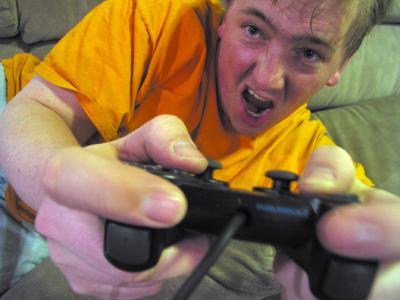
It’s no secret that Dr Shock enjoys a video game now and then. Time flies when I am having fun, at least that’s what I thought.
In recent research this phrase: “time flies when having fun” doesn’t apply to playing video games. Surprisingly the enjoyment values recorded for each task in this trial, 8 minutes reading from screen and 8 min video game play, and 24 minutes game play, were not correlated with the time estimation values. It didn’t matter whether you enjoyed your self or not, this didn’t influence your time estimation (wrong or good).
The results from this study shows that video game dependence defined as longer usual playing length and a greater number of hours spent playing per week are all associated with lower time estimations in the 24-min video game task. Since only the 24-min task is affected by the gaming profile, and not the 8- min task, the gamers seem to lose the track of time only when they immerse themselves in the game for a longer period. Moreover, the ones playing longer and a greater number of hours estimated the total duration of the study correctly. This indicates that they are able to perceive long durations adequately.
Their time estimation mechanisms for long durations are normal, and they just have difficulty estimating long video game playing sessions.
Compared to reading from a computer screen during 8 minutes, video game play for 8 minutes was estimated as shorter than the 8-min reading task. An attention-based hypothesis might explain this finding. The literature provides empirical evidence that an increase in mental workload yields shorter time judgments. Time may be estimated as shorter in the video game task because this Tetris task might require more mental effort than reading. Tetris requires a constant visual-motor coordination in addition to spatial abstraction to make sure the blocks are correctly aligned. As more resources are required to play the game, less attention is available and directed to the passage of time. That’s only for Tetris, can you imagine what would happen when playing Doom or Call of Duty 4.
How was this study done?
116 adolescents (14–15 years old) had to judge prospectively or retrospectively the duration of three consecutive tasks: a 8 min and a 24 min task of playing video game (Tetris) and an 8 min task of reading on a computer screen (control task).
Why is this important?
Adolescents play for a long duration of time not because their timing mechanism is disrupted by the video game but because their time mechanism is disrupted they play longer. The Chicken and Egg problem.
These findings are coherent with the hypothesis that time perception might partially determine playtime; adolescents who have a greater tendency to play video games tend to lose track of time when they play. As adolescents underestimate time when they play, they play for longer that they expected or planned to play. Moreover, they like to play because they lose the track of time when they play. Therefore, timing mechanisms might not only be disrupted by video games, but they might likely also be part of the reason why they play for long periods.
So does Dr Shock play a lot because he has inaccurate time estimations or does he have inaccurate time estimations because he plays a lot? What do you think?
S TOBIN, S GRONDIN (2009). Video games and the perception of very long durations by adolescents Computers in Human Behavior DOI: 10.1016/j.chb.2008.12.002
We knew this already, Green Tea and Red Wine and Dark Chocolate provide a degree of protection against coronary heart disease. But it also improves cognitive function.
The team from Oxford’s Department of Physiology, Anatomy and Genetics and Norway examined the relation between cognitive performance and the intake of three common foodstuffs that contain flavonoids (chocolate, wine, and tea) in 2,031 older people (aged between 70 and 74).
And guess what they found:
Those who consumed chocolate, wine, or tea had significantly better mean test scores and lower prevalence of poor cognitive performance than those who did not.
But take care, more research would be needed to prove that it was flavonoids, rather than some other aspect of the foods studied, that made the difference. Moreover, to much of any of those might cause other health problems.
Where would we be without all the new gadgets. Names, phone numbers, directions, appointments we use digital devices to remember them. But were did I leave my iPhone, GPS, telephone? Before the gadgets we used to be looking for our keys, wallet, glasses. So Object–location memory is now even more vitally important for many daily-life activities.
How does the brain automatically process where important things are?
Characteristics of object–location memory:
Object location is an important ability for evolution of mankind. Where did I leave my food, ax and so on. The use of tools and private material possessions has increased the need of this ability. Given its evolutionary relevance, it has been argued that spatial memory in general and object–location memory in particular would operate mainly in an automatic fashion
It is influenced by age, with increasing age a decrease in object location becomes eminent and sex hormones also influence object location. Women excel on a test of location memory for objects
Object–location memory directly connects to episodic memory, i.e. memory for personal events
Object–location memory consists of three main components: object processing, spatial-location processing, and object–location binding.
Object processing or Object identity memory might mainly depend on temporal-lobe structures, specifically in the right hemisphere. Object processing starts with the recognition of the object. The next step in object processing is keeping the recognized objects in memory. Object memory is less sensitive to brain damage in the hippocampal formation. Possibly, ventral cortical areas and prefrontal dorsolateral areas are important in remembering the target objects.
Spatial-location processing has been argued to be further broken down into an exact, metric position sense and a more relative, categorical sense of location. The former appears to include the right posterior parietal cortex. The latter seems to show a preference for the analogous part of the left hemisphere. It should be noted that there are also contributions from the prefrontal and hippocampal areas to spatial-location processing.
Object–location memory can be considered as a special class of episodic memory, reflecting a form of contextual memory in which object (identity) information has to be bound to location information. Episodic memory is often regarded as the highest form of human memory, allowing conscious recollection of events from one’s personal past.
For this the hippocampal formation is most critical.
Regarding the question how the relevant object location information enters the memory system, both attentional effort and automatic routines play a role, but we don’t know how yet.
Conclusion
Finding your IPhone is an important although complex procedure in which three steps for remembering the object location are important. Age and sex influences this ability, with increasing age retrieving important objects can become more difficult. Women excel in finding objects so ask your wife.
There are simple habits that you can develop over time that will get you to where you want to be. These are habits that you can apply to your work, your home, your kids, your hobbies, your life. Instead of giving you specifics for how to organize something specific, like your desk or your closet, I provide principles that you can use over and over in every situation.
Instead of organizing your house or business by things, consider organizing them by tasks. Organizing by things means placing similar items together: pens and pencils here, reference manuals there.
One of the side effects of having so much stuff to help us get work done is dealing with the clutter it creates in our workspace. But just like you can defragment a hard drive—organize the bits and bytes so that related ones are closest to one another for faster access—you can also defrag your office to make it more efficient. Put your stuff out of the way but within reach, and make it easy to find and put back with a few workspace organization techniques.
It’s a great big world out there for a tiny thing like a lost iPod or cellphone. SendMeHome is a free web based application that generates unique ID tags for your items, so that should a good Samaritan find your lost item, a short trip to SendMeHome.com is all it takes to send you a message indicating that your item has been found and how you can get it back.
A POSTMA, R KESSELS, M VANASSELEN (2008). How the brain remembers and forgets where things are: The neurocognition of object–location memory Neuroscience & Biobehavioral Reviews, 32 (8), 1339-1345 DOI: 10.1016/j.neubiorev.2008.05.001
Writing things down, on paper or on-screen, is the best way to make sure you remember important info and tasks, but sometimes you’ve got to rely on your plain old brain to keep essential data sorted and handy. Whether it’s a client’s name, a password or combination you want stored only in your head, or answers for an upcoming test, there are plenty of techniques and tools to help you lock in important stuff and pull it out when needed.
Nap to improve memory. Researchers in Israel report a daytime nap may help memory — especially for those learning more than one skill in one day.