Should you eat organic meat or tofu, should you run marathons? Watch this video how to become older than 100 years of age. Be prepared to be disappointed about how much you can influence this aging thing. Just enjoy yourself.
To find the path to long life and health, Dan Buettner and team study the world’s “Blue Zones,” communities whose elders live with vim and vigor to record-setting age. At TEDxTC, he shares the 9 common diet and lifestyle habits that keep them spry past age 100.
Social Capital Divide between the young and the elderly A social capital divide between elderly and younger people on the Internet is best described as a difference in resources that are created in social networks and relationships between people and that have a certain value or benefit for individuals participating in this network/relationships. Social capital can be created with participating in online networks such as Myspace. Age differences in online networking in Myspace exist. Elderly have fewer friends and mostly from age groups outside their own age compared to teenagers. Older people tend to be more careful and selective when choosing their friends on MySpace and only want to add to their friends list people that they know very well. Older people tend to represent themselves in a more formal and official way compared to teenagers. They tend to use less videos, music and the exchange of comments.
Learning computer skills
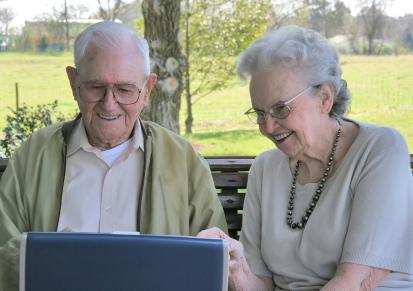
Another problem with the elderly can be a lack of computer skills. Despite the advantages of the Internet and advances in electronic communication, utilization of the Internet among older adults is relatively low. Improving computer skills of the elderly can enable them to access health information on the Internet and improve their health knowledge. Courses such as e-health programs can enhance the use of computers for improving knowledge of online health information. Your never to old to learn computer skills. Moreover, experience with technology, and not age, accounts for observed lifelong changes in digital literacy skills. Digital literacy improves with training in all age groups, the adult group improved significantly more than the younger participants.
A digital generational divide is developing
This indicates a gap between digitally literate users and the elderly. This has disadvantages especially for the elderly since new media and co-creation have the potential to increase individuals’ flexibility, expand opportunities for information retrieval and learning, and compensate for functional limitations such as reduced mobility, vision, hearing, and cognitive abilities. If you want to read more about how the elderly differ from the young in Internet use please read The Generational Divide in Internet use. Why this is important? These points should be kept in mind when creating a social network for the elderly. If you want to speed up the process of changing the elderly peoples’ use of computers and online communities think about these findings, and don’t forget about the In home care services that can help elderly be introduced to these new trends in the world, while also taking well care of their health
As always the answer to this question is not simple. From recent research it’s concluded that brain training games on paper are more effective and efficient than on computer consoles (Nintendo DS, in this research). Meaning that the task completion time was shorter on paper and the error rate was lower on paper. Many elderly people at this age are retired and can´t live on their own, that´s why these senior home care services are great to assist anybody in need.
However the advantages of using the console Brain Training is that games are more arousing and induces “a heightened sense of flow”. Flow being loss of self-consciousness, blurred feeling of time, and feeling of enjoyment and control during gaming. Moreover, these effects were for gamers of all ages.
The only difference between younger (18-25 years) and old gamers (> 64 years) was that logic problem-solving is associated with positive feelings for the elderly but with negative feelings in the young.
So if you want to do your granny a favor, buy her a logic training game on her console.
Elderly people take less time to solve on paper than on the console
Elderly people in general take more time than younger people to complete the task
Gender did not influence the time to complete tasks nor did it relate to the number of errors nor any other outcome measure.
Neither age nor form (paper or console) did influence the pleasure when playing
The feeling of control over a game for the elderly was regardless of form (paper or console) while the younger group felt less in control especially when playing the console. Feeling in control is not influenced by form but by age.
Decreased technological sophistication evokes lower levels of arousal in flow regardless of age
Arousal might be an important facilitator for flow for the younger age group, while for the older age group, pleasure, competence, and positive affect are all contributors to their flow experience
To my opinion this proofs that computer and console games makes it more pleasant, challenging and enjoyable to the elderly and each and every institution for the elderly should provide gaming opportunities like on Ocean Gardens because this retirement village has a very peaceful community. (yes thinking ahead here), what do you think?
Why is this important? It’s assumed that brain training games benefit elderly. It was never known whether you needed consoles or computers for this to achieve. Do games on paper worse than on console? The answer to this question was unknown. And does age have an influence on game play experience.
How was this study done?
This study employs a 2 by 2 mixed factorial design (age group: young and old by game form: paper and Nintendo DS) to investigate effects of age and game form on usability, self-assessment, and gameplay experience in a supervised field study. Effectiveness was evaluated in task completion time, efficiency as error rate, together with self-assessment measures (arousal, pleasure, dominance) and game experience (challenge, flow, competence, tension, positive and negative affect).
Nacke, L., Nacke, A., & Lindley, C. (2009). Brain Training for Silver Gamers: Effects of Age and Game Form on Effectiveness, Efficiency, Self-Assessment, and Gameplay Experience CyberPsychology & Behavior DOI: 10.1089/cpb.2009.0013
E-health is the use of Internet technology and electronic communication to support the delivery and management of health care services. Despite the advantages of the Internet and advances in electronic communication, utilization of the Internet among older adults is relatively low. Improving computer skills of the elderly can enable them to access health information on the Internet and improve their health knowledge.
Thirty elderly attending community centers in Hong Kong showed a significant increase in mastery of computer skills and interest in accessing health information via the Internet after a 4-week e-health program; knowledge of health information in the area of physical exercise also increased significantly.
The e-health program consisted of 1,5 hours per week attending sessions in the activity room of an elderly center. This program included the mastery of basic computing skills and accessing government health web sites that provide health information about exercise. These sessions were video taped and participants could open and view these sessions. Pre- and post-questionnaires about the e-health program, a knowledge test, and focus group interviews were used.
With the collaboration of community services, the use of technology in the form of an e-health program would be an effective tool in providing health education to older people. Computer skills, interest in accessing health information, and health knowledge gained were found among the 30 participants.
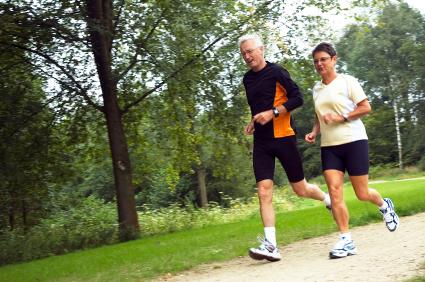
You’re never to old to run but you’re also never to old to learn computer skills. Moreover they both can improve your health.
MIMI M. Y. TSE, KIM C. Y. CHOI, RINCY S.W. LEUNG (2008). E-Health for Older People: The Use of Technology in Health Promotion CyberPsychology & Behavior, 11 (4), 475-479
Writing things down, on paper or on-screen, is the best way to make sure you remember important info and tasks, but sometimes you’ve got to rely on your plain old brain to keep essential data sorted and handy. Whether it’s a client’s name, a password or combination you want stored only in your head, or answers for an upcoming test, there are plenty of techniques and tools to help you lock in important stuff and pull it out when needed.
Nap to improve memory. Researchers in Israel report a daytime nap may help memory — especially for those learning more than one skill in one day.
A person 90 years old or between 90 and 100 years old has a high risk of losing independence, but the
prevalence of independence still declines only very modestly from age 92 to 100 years.This has the advantage of little societal care cost. So with the expansion of the life span at high age, above 90 years old, fear for high societal costs seems unfounded. The reason for this being that most disabled have a high mortality rate.
We live longer mainly due to a reduction in mortality rates among the oldest-old. There is considerable concern, that an extension of life into the highest ages in any birth cohort of elderly, now or in the future, will be accompanied by very high rates of loss of independence, with great personal and societal costs. There is a longstanding debate still going on within gerontology as to whether longer life is associated with a ‘‘compression of morbidity’’, an ‘‘expansion of morbidity’’, or a combination of both.
Recent research in Denmark seems to proof this fear unfounded. A longitudinal multi assessment survey of the entire Danish 1905 cohort from 1998 to 2005 was done. The loss of physical and cognitive independence in the age range of 92 to 100 years was assessed. They studied independence, which was defined as being able to perform basic activities of daily living without assistance from other persons and having a Mini Mental State Examination (MMSE) score of 23 or higher. Overall the 1905 cohort had only a modest decline in the proportion of independent individuals at the 4 assessments between age 92 and 100 years: 39%, 36%, 32%, and 33%, with a difference between first and last assessment of 6%.
Moreover, individuals who survive into the highest ages have a health profile that is similar in many aspects to that of individuals who are 7 or 8 years younger. This suggests that most individuals can expect to experience physical decline before they die, but the postponement of this individual decline makes it possible for us to live into the fourth age.
This result supports accumulating data that the prevalence of chronic disability is decreasing among the elderly. There is also evidence that successive cohorts are living not only longer but also better.
This is a longitudinal multi-assessment survey of the entire Danish 1905 cohort and as such a study well done providing strong evidence.
Prior Cross-sectional data indicate that dependency is considerably more prevalent in the oldest-old than in the younger elderly, but these studies are unable to disentangle age effects from cohort effects, and only a few longitudinal studies have a substantial sample size of the
oldest-old many of these studies exclude institutionalized individuals, and this exclusion severely biases
the estimation of the frequency of independence at the highest ages
K. Christensen, M. McGue, I. Petersen, B. Jeune, J. W. Vaupel (2008). Exceptional longevity does not result in excessive levels of disability Proceedings of the National Academy of Sciences DOI: 10.1073/pnas.0804931105
Running at middle and older ages is associated with reduced disability in later life and a notable survival advantage.
According to a recent published study in the Archives of Internal Medicine. They published the results of a longitudinal study comparing disability and mortality outcomes between cohorts of runners and control subjects initially aged 50 to 72 years after 21 years.
This is important because with the rise in life expectancy, it becomes necessary to focus on improving the quality of life and functional abilities as people reach older ages.
In addition to confirming an overall survival advantage and reduction in cardiovascular-related deaths among persons who participate in regular exercise, we also found a reduced rate of deaths from other causes including malignant neoplasms and neurologic disorders.
Limitations
A lack of random assignment of external interventions.Overall, 60% of initial study participants who were still alive at the 21-year assessment continued to participate,which is a low drop out rate considering the length of follow up (21 years). Because the majority of the participants were white,
completed college education, had a BMI within normal limits, and had low alcohol and tobacco consumption, it is possible that these results may not be generalizable to a broader range of persons with different ethnic backgrounds, educational opportunities, access to preventive health care, or lifestyle habits.
Eliza F. Chakravarty, MD MS;, Helen B. Hubert, PhD;, Vijaya B. Lingala, PhD;, James F. Fries, MD (2008). Reduced Disability and Mortality
Among Aging Runners Archives of Internal Medicine, 168 (15), 1638-1646 DOI: 18695077
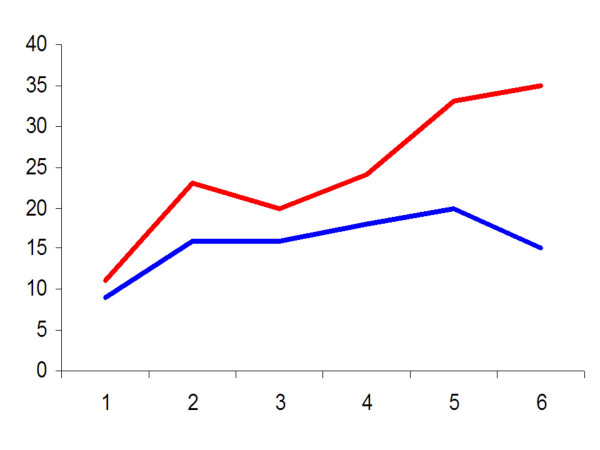
An increasing number of randomized controlled studies have clearly demonstrated that psychological interventions are effective in the treatment of depression.
This can also be seen from the above figure: number of studies from 1970 to 2005 in the world (red line), and in the United States (blue line).
The data on the 149 included studies are presented in order to give other researchers access to the studies we collected, and to give background information about the meta-analyses we have published using this dataset. The number of studies examining the effects of psychological treatments of depression has increased considerably in the past decades, and this will continue in the future. The database we have presented in this paper can help to integrate the results of these studies in future meta-analyses and systematic reviews on psychological treatments for depression.
This group performed systematic reviews and meta-analysis on different subjects within psychotherapy for depression.
Too few studies were available to draw conclusions about the relative effects of psychological treatments compared to pharmacological and other treatments for psychological treatment of post partum depression
Activity scheduling is an attractive treatment for depression, not only because it is relatively uncomplicated, time-efficient and does not require complex skills from patients or therapist, but also because a meta-analysis found clear indications that it is effective. Activity scheduling is a therapy in which patients learn techniques to monitor their mood and daily activities, and to see the connection between these. Then the patients learn how to develop a plan to increase number of pleasant activities and to increase positive interactions with their environment. In this approach, specific attention is paid to social skills and interactions with other people.
In this paper, they present the methods they have used to build this database, and an overview of the characteristics of the studies that have been included in the database.There objectives with providing free access to this database are:
The database can give other researcher access to the studies they have collected and facilitate replications and independent analyses of selections of studies.
The database can provide background information about their own (published, in press, and currently written) meta-analyses.
They hope the database might help researchers to plan new studies and hence either encourage or discourage replications without “reinventing the wheel”.
Cuijpers, P., van Straten, A., Warmerdam, L., Andersson, G. (2008). Psychological treatment of depression: A meta-analytic database of randomized studies. BMC Psychiatry, 8(1), 36. DOI: 10.1186/1471-244X-8-36
CUIJPERS, P., VANSTRATEN, A., WARMERDAM, L. (2007). Behavioral activation treatments of depression: A meta-analysis. Clinical Psychology Review, 27(3), 318-326. DOI: 10.1016/j.cpr.2006.11.001
Cuijpers, P., Brännmark, J.G., van Straten, A. (2007). Psychological treatment of postpartum depression: a meta-analysis. Journal of Clinical Psychology, 64(1), 103-118. DOI: 10.1002/jclp.20432
Cuijpers, P., van Straten, A., Smit, F. (2006). Psychological treatment of late-life depression: a meta-analysis of randomized controlled trials. International Journal of Geriatric Psychiatry, 21(12), 1139-1149. DOI: 10.1002/gps.1620