Recommended Reading This Week: Empathy and Neurostimulation


Recommended reading is a weekly summary of interesting posts and selected links I posted on Twitter
[recreading]
Recommended reading is a weekly summary of interesting posts and selected links I posted on Twitter
[recreading]
Excellent animation of deep brain stimulation thanks to the Cleveland Clinic
The mural tells the story of a horrible day back in the spring. Fred was being transferred to a new hospital and Regina needed records of Fred’s many tests and treatments from the old hospital.
“I had gone down to medical records,” Holliday says, “and they said, ‘That’ll be 73 cents a page and a 21-day wait.’ I said, ‘My husband is upstairs with Stage IV kidney cancer in your hospital and you’re telling me I have to wait 21 days? Everything’s on the computer. All you got to do is print it out and you’re going to make me wait 21 days?’ And they’re like, ‘Yeah, that’s just the way it is.’ I was floored.”
But there is more, to her it was a wonderful therapy and relief to get to paint. While painting discussions with passers by ensued, Regina’s mural got more political, more about health care reform.
Read the whole story here...

Art and psychiatry is always an interesting combination to me. It has so many perspectives. Does being an artist combine with psychiatric illness, how do they influence each other? To name just a few perspectives. On this blog I regularly post about artists and psychiatry and painters and psychiatry in a broad sense.
Can depression as one important psychiatric illness enhance creativity despite depressed mood, loss of interest not to mention a lack of concentration and all other symptoms? Art can be comforting or even a form of medication. Klaas Koopmans (1920-2006) a Dutch artist who during his admissions as an inpatient for depression drew his fellow patients in psychiatric hospitals on the back of his cigar boxes and note paper. Department rules didn’t permit him drawing or painting. He made these secretly. He had bipolar disorder. His last admission to a psychiatric hospital was in 1963.
The grand son of the famous Sigmund Freud, Lucian Freud (b. 1922) is famous around the world for his intimate and revealing portraits and nudes.
With his keen eye and highly personal approach, he lays bare the hidden feelings and thoughts of his subjects. The aim is not to achieve any superficial or flattering likeness, but to reveal the essence of the subject’s inner being. The results are impressive and extremely private portraits of vulnerable individuals.
Tales of a Borderline is an exhibition of artwork by artists with Borderline Personality Disorder (BPD). This disorder affects a persons emotions, causing emotional instability. Tamar Whyte one of the artists has her own website with galleries and a lot of more information also on borderline personality disorder.
The Wellcome Collection museum in London has an exhibition on Art and Mental Illness. The museum has two fantastic free exhibitions on the art and history of mental illness.
A post on the question Did Salvador Dali suffer from mental illness certainly raised a lot of comments.
Wasily Kandinsky didn’t suffer from mental illness but he had synaesthesia. Kandinsky in whom musical tones elicited specific colours, was a tone-colour synaesthete. Kandinsky used his synaesthesia to inform the artisitic process – he tried to capture on canvass the visual equivalent of a symphony. An aerial view shows the market square of the southern Bavarian town of Weilheim, Germany painted with a copy of Russian-born French Expressionist Wasily Kandinsky’s painting ‘Weilheim-Maria’s square’. 500 mostly students have been working on it for three weeks.

The MedLib’s Round, the monthly blog carnival that highlights some of the best writing on medical librarianship, encompassing all stages in the publication and dissemination of medical information: writing, publishing, searching, citing, managing and social networking is up at Highlight Health.
I especially liked:
MedlinePlus vs. healthfinder: Must We Choose?
why there are two major consumer health information sites supported by the government — MedlinePlus and healthfinder.gov.
So how can you make sense of the millions of websites and find online health information that is reliable?
Can You Trust That Health Website?
Do you subscribe to RSS feeds? Are you using social media? Have you ever wished you could integrate everything into a single organized page? Read Feed me Feedly on Life in the fast lane
But there’s more, three posts on PubMed’s redesign and much more have a look
Stanford Professor Robert Sapolsky says “depression is like the worst disease you can get.” Here is an excerpt from that lecture. A video of the complete lecture is available here.
During a recent workshop presented by Stanford’s Faculty and Staff Help Center, biologist Robert Sapolsky talked about the biological and psychological causes of depression, how to recognize its symptoms and how to handle the disease.
In short depression is an illness not a weakness.
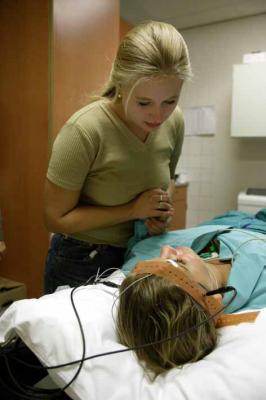
The best information in health care is from patients who have been there. Those who underwent treatment, suffer from a certain illness. It’s the kind of hands on experience physicians can’t deliver. On this blog I have collected some examples of these “hands on experiences”. Some recent posts were written about ECT by them with hands on experience.
Aqua on Vicarious Therapy wrote a post on ECT and media portrayals of depression treatment options. She is irritated by the negative portrayal of ECT in the media.
It irritates me, (and does not help me explain potential treatments to concerned family members), when the media, either by negative portrayal or by leaving positive and informative information about ECT out of stories about depression treatments, subtly dismisses or devalues an effective and proven helpful treatment for resistant/refractory depression.
Besides here opinion on ECT she also writes about treatment resistant depression. Rightfully she points to the fact that despite all the treatment options sometimes depression is not a treatable disease. Read her post on this topic here….
On jumpstarting a life with a little spark on the head the 7th lesson about ECT is presented. Yes this blog has some excellent lessons for ECT patients. This 7th lesson is about being informed on ECT. Two books about ECT are discussed:
Both of these books are not long (about 100 pages) but more detailed than much of the information I gathered on the web. These books are definitely more clinical in nature, but they are easy to understand and I think these details help you be more calm when you go through treatment.
For a more prosaic discussion on ECT and it’s efficacy please read: An E.C.T. morning by pistolpete on Necessary Therapy
Almost a year later and I’m still wondering if E.C.T. was right for my particular case. Given the information we had at the time, I have to believe it was worth a shot.
Mental health Update discusses a recent article: Rayner, Lauren … [et al] – The patient perspective of the consent process and side effects of electroconvulsive therapy Journal of Mental Health October 2009, 18(5), 379-388. It’s a survey of 389 people who had had ECT focusing on the consent process and side effects of the treatment. Interesting read.

Two of my favorite blog colleagues wrote posts about twitter lists. Not the new feature of twitter to make your own lists and exchange them but a collection of medical and other scientific journals on twitter and a list of scientists on twitter.
These lists are an excellent starting point if your interested in following some of them scientists or journals in your field on twitter.
The alphabetical twitter lists of scientists on twitter was included with biographical data and photos by Justin Reid and analyzed by 2020science to show how all those science types were interconnected. This resulted in a long list of scientists on twitter to be seen and read and selected for following on Listorious: Scientwist, curated by David Bradley.
The other collections were made by Laikas: Medical and other Scientific Journals. She started a google spreadsheet to be completed by all those interested in collecting bio-medical journals on twitter. Based on a poll she created 3 Twitter Journal List. You can subscribe to these lists and stay tuned. She made a completely overlapping set, where the Medical journal set is part of the Biomedical journal set, which belongs to the All/Science set. You can still adjust the spreadsheet with new journals in this field
You can follow each list on twitter, read her original post.
Depends? If the object is moving you’ll need less pixels or resolution.
A man runs. He falls down. He struggles back onto his feet and he runs some more. It’s a simple narrative. Even without much detail, you can understand what’s going on. Pause the video, though, and the scene isn’t nearly as clear. Movement makes up for the lack of other visual information. Your brain can read and understand a video at much lower resolution than it would need to make equal sense of a still frame.
Meet Jim Campbell, a former Silicon Valley engineer turned visual artist.
Want to know about this phenomenon and the artist go to BoingBoing

The new Palliative Care Grand Rounds is up. It’s the monthly review of the best of palliative care related blogs.
This month I am handing out awards because I am so glad to see so many bloggers talking about palliative care issues and I think some of them need to be recognized. If you need to pick up your award, feel free to come visit me in Kansas City.
Hope I will be in the neighborhood of Kansas City in the near future to collect my award.