Dr Shock MD PhD
A Neurostimulating Blog
RSS
  • Home
  • About
  • Contact
  • Disclaimer
  • Privacy Policy

Deep Brain Stimulation 5 comments brain stimulation, Depression, EpCS, Treatment Resistant Depression

New Kind of Brain Stimulation for Treatment Resistant Depression

Dr Shock

October 20, 2009

brain stimulation

In a recent online publication about another form of brain stimulation in treatment resistant depression showed promising results. The electrodes are placed on the brain instead of in the brain as with Deep Brain Stimulation (DBS):

A new neurosurgical procedure may prove helpful for patients with treatment-resistant depression. Bilateral epidural prefrontal cortical stimulation (EpCS) was found generally safe and provided significant improvement of depressive symptoms in a small group of patients

The location for Brain Stimulation in EpCS targets electrical stimulation to the anterior frontal poles and the lateral prefrontal cortex. Two different places on both hemispheres, resulting in four separate paddle leads which are connected to two small generators surgically implanted in the upper chest area of the patient. The leads are placed through a burr hole in the skull but above the dura mater and thus remain separated from the underlying cortical region by the arachnoid space. ECS is more direct than transcranial magnetic stimulation (TMS) and or vagus nerve stimulation (VNS) and potentially safer than deep brain stimulation (DBS), which involves passing the electrodes through brain tissue.

Of five patients three reached remission. Overall after seven months, the average improvement was 54.9 percent based on the Hamilton Rating Scare for Depression.

Advantages according to the team:

“Cortical stimulation has several advantages provided that it shows efficacy in treating depression. It is reversible, non-destructive and potentially safer than other forms of invasive brain stimulation since the stimulating paddles don’t come in direct contact with the brain.”

Deep Brain Stimulation is a neuro-surgical procedure used in mostly neurological and psychiatric disorders. In this procedure electrodes are placed in the brain, not on the brain. A great step forward, patients don’t have to be awake during the procedure. This post has a video showing a clear description of the old and new procedure for deep brain stimulation (DBS).

Deep Brain Stimulation (DBS) is mostly used for Parkinson’s Disease. DBS for Obsessive Compulsive Disorder and Depression is just starting to be used. It is unclear how DBS works for Parkinson’s Disease.

It is used for treatment resistant depression. When other treatments fail, deep-brain stimulation (DBS) may offer hope to patients suffering from chronic and severe depression. In recent published research about deep brain stimulation for treatment resistant depression, six months after surgery, 60% of patients were responders and 35% met criteria for remission, benefits that were largely maintained at 12 months.

The most appropriate target, optimal stimulation parameters, and long-term effects and efficacy remain uncertain. The targets for deep brain stimulation in treatment resistant depression has 6 options available.

This post was chosen as an Editor's Selection for ResearchBlogging.org

ResearchBlogging.org
Nahas, Z., Anderson, B., Borckardt, J., Arana, A., George, M., Reeves, S., & Takacs, I. (2009). Bilateral Epidural Prefrontal Cortical Stimulation for Treatment-Resistant Depression Biological Psychiatry DOI: 10.1016/j.biopsych.2009.08.021

Internet 4 comments computer skills, digital divide, digital literacy, eHealth, Elderly, social capital divide

Elderly and Internet and Computer Skills, An Update

Dr Shock

October 19, 2009

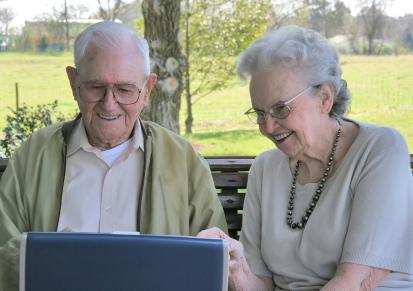
Happy Elderly

Social Capital Divide between the young and the elderly
A social capital divide between elderly and younger people on the Internet is best described as a difference in resources that are created in social networks and relationships between people and that have a certain value or benefit for individuals participating in this network/relationships. Social capital can be created with participating in online networks such as Myspace. Age differences in online networking in Myspace exist. Elderly have fewer friends and mostly from age groups outside their own age compared to teenagers. Older people tend to be more careful and selective when choosing their friends on MySpace and only want to add to their friends list people that they know very well. Older people tend to represent themselves in a more formal and official way compared to teenagers. They tend to use less videos, music and the exchange of comments.

Learning computer skills
Another problem with the elderly can be a lack of computer skills. Despite the advantages of the Internet and advances in electronic communication, utilization of the Internet among older adults is relatively low. Improving computer skills of the elderly can enable them to access health information on the Internet and improve their health knowledge. Courses such as e-health programs can enhance the use of computers for improving knowledge of online health information. Your never to old to learn computer skills. Moreover, experience with technology, and not age, accounts for observed lifelong changes in digital literacy skills. Digital literacy improves with training in all age groups, the adult group improved significantly more than the younger participants.

A digital generational divide is developing
This indicates a gap between digitally literate users and the elderly. This has disadvantages especially for the elderly since new media and co-creation have the potential to increase individuals’ flexibility, expand opportunities for information retrieval and learning, and compensate for functional limitations such as reduced mobility, vision, hearing, and cognitive abilities. If you want to read more about how the elderly differ from the young in Internet use please read The Generational Divide in Internet use. Why this is important? These points should be kept in mind when creating a social network for the elderly. If you want to speed up the process of changing the elderly peoples’ use of computers and online communities think about these findings, and don’t forget about the In home care services that can help elderly be introduced to these new trends in the world, while also taking well care of their health

Academic 0 comments Evolution, genes

The Origin of Genes

Dr Shock

October 18, 2009

The human genome contains some 25,000 genes. Where did they come from? How are new genes formed? Before continuing with the Origins Series and The Origin of Cognition, I wanted to take a step back…

Neuroscience 0 comments brain, supercomputer

How to build a brain from a supercomputer

Dr Shock

October 17, 2009

Henry Markram says the mysteries of the mind can be solved — soon. Mental illness, memory, perception: they’re made of neurons and electric signals, and he plans to find them with a supercomputer that models all the brain’s 100,000,000,000,000 synapses.

How can we make a brain from a super computer. In this video a theory is explained how to do it. All based on the universe. The universe has evolved to “see” itself in the brain. Interesting theory. The design secret of the brain is diversity. And other important principles to understand the brain.

Internet 0 comments conference, gel health, patient experience

Gel Health, Conference About The Patient Experience in Health Care

Dr Shock

October 16, 2009


Bridget Duffy at Gel 2008 from Gel Conference on Vimeo.

Creating a good patient experience is the focus and mandate of the Chief Experience Officer at the Cleveland Clinic, one of the world’s top-rated medical facilities. In this talk, Bridget Duffy shows the theory and practice of patient-centered care, including an on-stage demo of an innovative patient gown.

Gel Health will explore the patient experience in a variety of organizations and companies. They’re having a conference Gel Health. It will be held on Thursday and Friday, October 22 and 23, 2009 at Scandinavia House, Park Avenue and 38th Street in Manhattan, New York. Check out their website for further information

Internet 1 comment blog, blogging

Why Blog? 2

Dr Shock

October 15, 2009

happy blogger

Surveys indicate

  • a growth of nearly 9 million Americans creating blogs between 2004 and 2005, a shift from 1.1 million to 10 million bloggers.
  • In 2006, 39% of all U.S. Internet users were accessing blogs.
  • More than 70% of blogs were classified as personal journals, recording the individuals’ daily life events, thoughts, and feelings.
  • Bloggers present accurate portrayals of themselves in their blogs.
  • Studies indicate that young adults and adolescents are more likely than other age groups to create blogs.
  • Men are somewhat more likely than women to create blogs.
  • Age and sex are said to have little bearing on the content of blogs.
  • Men create blogs for information purposes, whereas women are more interested in self-expression.
  • Females are said to be more likely to present themselves as ‘‘friendly,’’ whereas males present themselves more often as ‘‘confident.’’
  • Motivations for blogging: self-expression, networking, identity management, preserve and augment existing relationships.

But how is that on MySpace?
Guess what:

Results suggest that MySpace blogs are not dissimilar from other forms of blogging because they provide an important outlet for emotion and self-expression.

ResearchBlogging.org
Fullwood, C., Sheehan, N., & Nicholls, W. (2009). Blog Function Revisited: A Content Analysis of MySpace Blogs CyberPsychology & Behavior DOI: 10.1089/cpb.2009.0138

Medblog 0 comments medlib grand round

MEDLIB’s ’spooktacular’ round 1.7 is up

Dr Shock

October 14, 2009

MedLib Grand Round

MEDLIB’s ’spooktacular’ round 1.7 is up at Alisha764’s Blog: A solo medical librarian’s ramblings. A blog carnival of “excellent posts in the field of medical librarianship.”

Amongst excellent topics also the long awaited PubMed redesign was previewed this week. Another highly anticipated preview was Google Wave. You could argue both previews have brought to light issues with the new products; however, each holds promise for changing the medical library field. The discussion about H1N1 flu and vaccination is another topic leading to several excellent posts.

Check it out at Alisha764’s Blog: A solo medical librarian’s ramblings

Academic 0 comments presentation zen, presentations, slide:ology

Scientific Presentations

Dr Shock

October 14, 2009

Scientific presentations for persuading smaller audiences (details, interaction, no distractions) requires a Conference Room style presentation. Conference Room style presentations tend to contain lots of details on each slide, the slides are mostly printed, not projected, and every slide must pass the squint test. The squint test is ensuring that your slide or hand out reinforces its main message. This can result in overcrowded but useful slides. So sciencetific presentations make mostly use of slideuments or documents, hand outs.

This video with Garr Reynolds form Presentation Zen and Nancy Duarte from slide:ology demonstrates the differences between ballroom presentations and scientific presentations. They also show the use of both for a small audience, good video.

You can also read about the distintions in a downloadable pdf

Academic 6 comments Math identification, maths, women, Women Academic workforce Lecturers Professor, Women and math

Why Women Drop Maths

Dr Shock

October 13, 2009

math women

Not only in the medical academic workforce are women underrepresented this also counts for science in general.

Women earned 31.3% of chemistry PhD degrees between 1993 and 2003 but in 2002 were hired for only 21.5% of assistant professorships. Similar disparities exist for new faculty appointments in physics, engineering, and mathematics.

As far as mathematics are concerned women continue to lag behind on math related careers. This gender gap has been tried to explain from a biological point of view but this ingrained prejudice has never been proven. Results from a wide range of studies shows contradictory results and remains inconclusive.

From a recent review on this subject it’s concluded that factors for underrepresentation in math intensive field are:

  • Math-proficient women disproportionately prefer careers
    in non–math-intensive fields and are more likely to leave math-intensive careers as they advance;
  • more men than women score in the extreme math-proficient range on gatekeeper tests, such as the SAT
    Mathematics and the Graduate Record Examinations Quantitative Reasoning sections;
  • women with high math competence are disproportionately more likely to have high verbal competence, allowing
    greater choice of professions;
  • in some math-intensive fields, women with children are penalized in promotion rates.

In even a more recent study it was shown that women who believed their math skills to be fixed and unchangeable were dropping math more often compared to women who believed their math skills to be malleable. Women who belief that they can’t grow in maths are more easily disengaging from math following failure. These women also reported less enjoyment and interest in math related subjects. Let alone, were interested in pursuing a “math career”.

Individual differences between women, differences in trait beliefs accounted for their liking, enjoying and pursuing of a math career.

Why is this important?
In order to resolve the gender gap issue in math there should be a focus on those women in academia that belief their math skills to be unchangeable. Early in their careers attention should be payed to those young girls that belief they can’t improve their math skills. It would be very efficient to focus on this group instead of larger more expensive programs addressing women in general.

Even though a great deal of attention and research has focused on the gender gap in mathematics, it still continues to persist. The results of the present study suggest that this gender difference may be primarily driven by a subset of women – those who believe their math ability is fixed and unchangeable.

It would be interesting to replicate this research on men. I know of one who’s not bothered by his lack of math skills: Bill O’Reilly should learn his maths. Moreover, now with the new Nobel prizes women have the last laugh: Do women have the brains to be great scientists

In 2005, while president of Harvard, he suggested that women are inherently worse than men at math, science and engineering, particularly at the highest levels. This week three women won Nobel prizes in science: two in medicine and one in chemistry. That achievement should put the nail in the coffin of the question Summers raised: Can many women really be great scientists?

ResearchBlogging.org
Burkley, M., Parker, J., Paul Stermer, S., & Burkley, E. (2009). Trait beliefs that make women vulnerable to math disengagement Personality and Individual Differences DOI: 10.1016/j.paid.2009.09.002
Ceci, S., Williams, W., & Barnett, S. (2009). Women’s underrepresentation in science: Sociocultural and biological considerations. Psychological Bulletin, 135 (2), 218-261 DOI: 10.1037/a0014412

Internet 3 comments e-break, e-mail, ebreak, email, email etiquette, email overload

When to check your e-mail?

Dr Shock

October 12, 2009

e-mail behavior

[poll id=”2″]

E-mail is an inexpensive, efficient and fast way of communication. It can enhance communication between departments and communication across continents. Nevertheless a lot of posts and especially blogs write about email overload: Lifehacker.com, Email Overloaded, Harvard Business School.

They advice you to check your email at certain time points in the day, usually twice a day somewhere around 11 a.m and 4 pm. The scientific background for this solution to these loathsome distractions is based on Reducing the Effect of Email Interruptions on Employees. In this research 15 people of the Danwood company in the UK were monitored over 28 working days by software on their computer: WinVNC. This allows viewing of a remote computer desktop environment, the users could not tell whether they would be watched. The server side had a video recorder attached to record the activities of the employee.

It took the employees an average of 1 minute 44 seconds to react to a new email notification by opening up the email application. The majority of emails, 70%, were reacted to within 6 seconds of them arriving and 85% were reacted to within 2 minutes of arriving. The time it takes the employees to recover from an email interrupt, and to return to their work at the same work rate at which they left it, was found to be on average 64 seconds.

Email is just one of many interruptions during work, others being telephone calls, buzzers and personal visits. The advantage of email above these other interruptions is that you don’t have to act immediately. Phone calls and personal visits and buzzers are far more interruptive. To my opinion there’s a shift towards more use of email instead of phone calls and personal visits although these two might be more appropriate in certain circumstances than email.

In a post about more recent research into email a blessing or a burden, frequent e-mail checking didn’t interrupt the work routine. Workers checked e-mail frequently and these interruptions were positive because they increased the collection of important information for getting the job done. The theory that frequent e-mail checking interrupted working and is detrimental to work performance could not be supported in this study.

Moreover, those using e-breaks to check their email more often used their time on work for personal email and procrastination.

Taking breaks throughout the workday is not necessarily a negative thing, but taking a break on the computer does not necessarily provide the physical and mental relief that another form of break might provide. Therefore, these employees might con- ceivably be taking other breaks in addition to their e-breaks. In addition, e-mail breaks provide the op- portunity for increased personal mail usage, when employees may engage in inappropriate use.

To my opinion it’s not a matter of when you’re checking the email, it’s more about integrating the email in your work. It’s more about email etiquette. Check these rules, you probably have violated one resulting in email overload. Another important issue is how to deal with your email. Again a lot of excellent advice online is available. To me it comes down to getting to grips with your email, incorporate it in your work. You’re the one to decide when to check your email or not. What do you think?

ResearchBlogging.org
Jackson, T. (2003). Reducing the effect of email interruptions on employees International Journal of Information Management, 23 (1), 55-65 DOI: 10.1016/S0268-4012(02)00068-3

Mano, R., & Mesch, G. (2009). E-mail characteristics, work performance and distress Computers in Human Behavior DOI: 10.1016/j.chb.2009.08.005

Baker, J., & Phillips, J. (2007). E-mail, Decisional Styles, and Rest Breaks CyberPsychology & Behavior, 10 (5), 705-708 DOI: 10.1089/cpb.2007.9966

«‹ 71 72 73 74›»

Subscribe via E-Mail

Enter your email address:

Recent Comments

  • deborah l schafer on 10 Video’s on Electroconvulsive Therapy
  • Jennifer on Why some people don’t like the humor of Monthy Python
  • Sophie on Learning styles are dead
  • Gail Swanson on Should a Psychiatrist Wear a White Coat?
  • coleharper55 on About

Blogroll

  • Brass and Ivory
  • Corpus Callosum
  • Cryptocheilus Weblog (Dutch)
  • Doc Gurley
  • Doctor Dymphna’s Diliberations
  • Dr Confabula
  • Dr. Deb
  • Dr. Wes
  • Finding Optimism
  • Frontier Psychiatrist
  • Garth Kroeker
  • GruntDoc
  • Helen Jaques
  • Het Interactieve Brein
  • Kevin, M.D.
  • Laika’s MedLibLog
  • Lake Cocytus
  • Mad World
  • Marianas Eye
  • Musing of a Dinosaur
  • Neuronarrative
  • Pasadena Therapist
  • Pre-Med Hell
  • PsychiatrieNet
  • psychobabble
  • Psychopharmacology Institute
  • ScienceBlog Medicine
  • Shrink Rap
  • Survival Blog for Scientists
  • The Carlat Psychiatry Blog
  • The Last Psychiatrist
  • Vicarious Therapy
  • Zen Habits

Personal

  • Books read by Dr Shock
  • Dr Shock’s Wiki
  • His Publications in PubMed
  • On LinkedIn
  • Personal Website
  • Photo’s by Dr Shock

Categories

  • Academic
  • Addiction
  • Antidepressants
  • Bipolar disorder
  • Book review
  • Chocolate
  • Cognitive Behavioral Therapy
  • Deep Brain Stimulation
  • Depression
  • Drug Addiction
  • ECT
  • Education
  • Games
  • General Medicine
  • Internet
  • Internet Addiction
  • Medblog
  • Media
  • Memory
  • Movies
  • Neuroscience
  • Neurostimulation
  • Psychiatry
  • Psychotherapy
  • Shrink Life in General
  • social media
  • Transcranial Direct Current Stimulation
  • Transcranial Magnetic Stimulation
  • Treatment Resistant Depression
  • Vagus Nerve Stimulation
Back to Top
© Dr Shock MD PhD 2026
Powered by WordPress • Themify WordPress Themes